Buy heralogic.eu ?
We are moving the project
heralogic.eu .
Are you interested in purchasing the domain
heralogic.eu ?
domain@kv-gmbh.de · 0541-91531010
Buy heralogic.eu ?
What are peptide bonds?
Peptide bonds are covalent bonds that link amino acids together in a protein chain. They are formed through a condensation reaction between the carboxyl group of one amino acid and the amino group of another amino acid, resulting in the release of a water molecule. Peptide bonds are crucial for maintaining the structure and function of proteins, as they determine the sequence of amino acids in a protein chain. **
What is correct: peptide bond?
A peptide bond is a covalent bond that forms between the carboxyl group of one amino acid and the amino group of another amino acid during protein synthesis. This bond is formed through a condensation reaction, where a molecule of water is removed. The resulting bond is a strong and stable linkage that holds the amino acids together in a protein chain. Therefore, the correct term is "peptide bond" to describe this specific type of covalent bond between amino acids. **

Similar search terms for Mizon-Peptide-Ampoule-Cream
Top-Angebote
Products related to Mizon-Peptide-Ampoule-Cream:
-
APLB Amino Acid Peptide Ampoule Soothing and Firming Facial Serum 40mLA facial serum for sensitive skin. Lifts and firms sagging skin. Strengthens the skin barrier. Free from harsh ingredients. Amino Pept Cen™: Combines amino acids, peptides, and cica extract to enhance skin elasticity and soothe irritation. Hyaluronic Acid: Provides deep, lasting hydration. Lotus Leaf Extract: Rich in antioxidants to protect and calm the skin.42,19 £*Shipping: 5,28 £Secure redirect to the provider
-
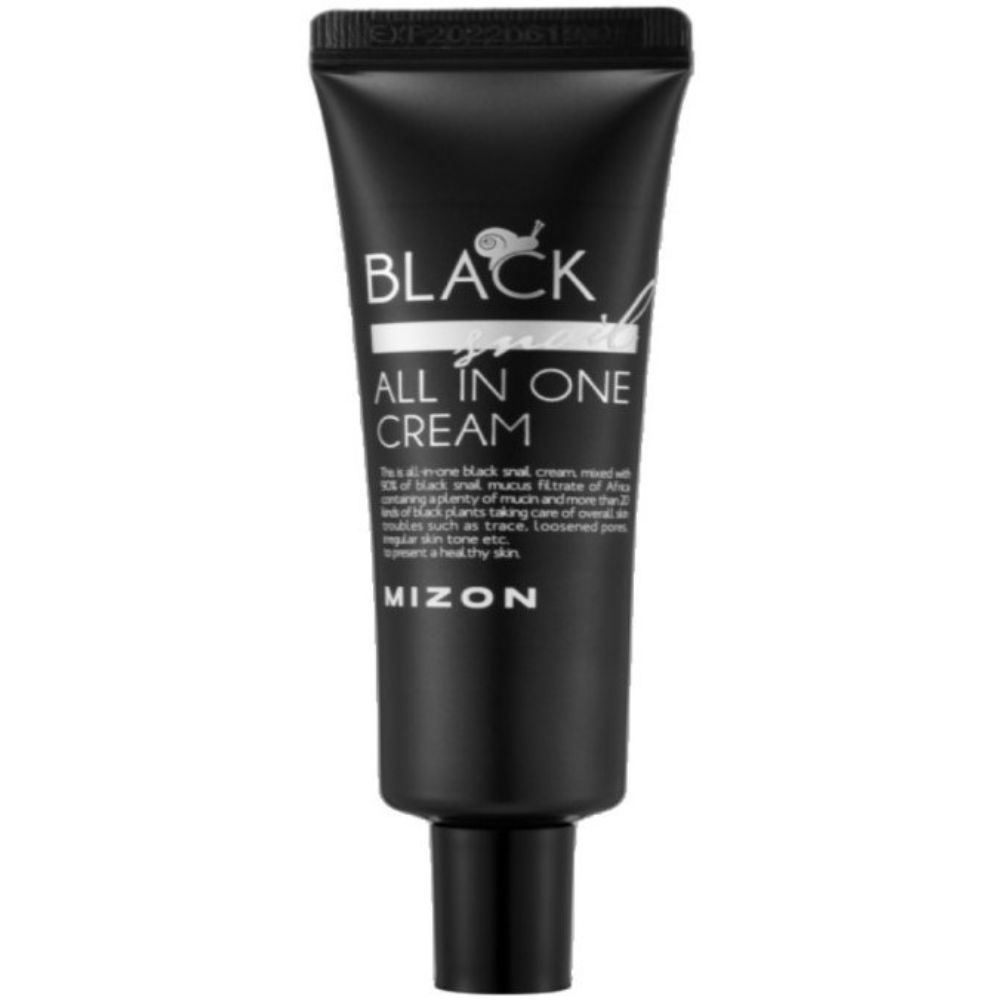
Mizon Black Snail All in One Cream 35mLA facial cream for wrinkles and signs of ageing. It a truly innovative and moisturizing cream formulated with 90% snail extract. The combined synergy of 90% black snail mucus filtrate, 27 black plant extracts, adenosine, peptide and vitamin, creates a cream that cares for every skin type and any problem, providing an excellent regenerative effect.7,85 £*Shipping: 5,28 £Secure redirect to the provider
-
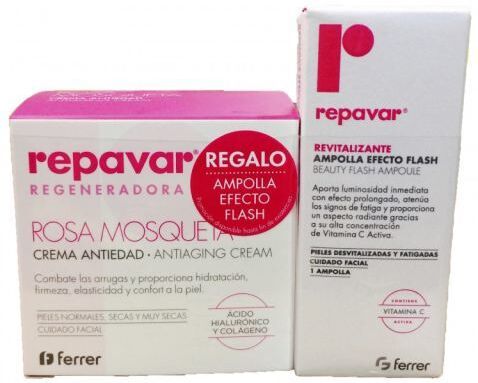
Repavar Anti-aging cream + flash ampouleHealth and Beauty Creams Repavar Anti-aging cream + flash ampoule It is a very complete treatment that combines the benefits of rosehip, collagen, and hyaluronic acid to provide hydration, firmness, comfort, and elasticity to the skin and effectively combat wrinkles. It also contains vitamin E and shea butter. Thanks to its composition, the benefits for the face can be observed in a short time: Deep hydration for skin that has lost vitality Melting cream and rich texture that leaves no greasy residue Contains no preservatives, colorants or alcohol Brighter and more radiant skin24,29 £*Shipping: 3,99 £Secure redirect to the provider
-
Mizon Collagen Power Lifting Cream Intensive Firming Solution 75mLA skin-care product for wrinkles and signs of ageing. Collagen Power Lifting Cream is an anti-aging and anti-wrinkle treatment cream that uses ingredients of natural origin and a 75% concentration of marine collagen. The formula was developed to combat the aesthetic changes caused by aging and to reduce and prevent the appearance of wrinkles and expression marks.17,72 £*Shipping: 7,03 £Secure redirect to the provider


-
What is a peptide bond, peptide chain, peptide group, di-, tri-, and polypeptide? Can you please explain this briefly and simply? Thank you.
A peptide bond is a chemical bond that forms between the carboxyl group of one amino acid and the amino group of another amino acid. When multiple amino acids are linked together by peptide bonds, they form a peptide chain. A peptide group refers to a group of amino acids linked together by peptide bonds. A dipeptide is a chain of two amino acids, a tripeptide has three amino acids, and a polypeptide is a chain of many amino acids linked together. These chains of amino acids are the building blocks of proteins. **
-
How does hydrolysis occur during peptide cleavage?
Hydrolysis occurs during peptide cleavage when a water molecule is used to break the bond between the carboxyl group of one amino acid and the amino group of another. This process involves the addition of a water molecule to the peptide bond, resulting in the separation of the two amino acids. The water molecule donates a hydrogen ion to one amino acid and a hydroxide ion to the other, causing the bond to break and the peptide to be cleaved. This hydrolysis reaction is catalyzed by enzymes called proteases, which facilitate the cleavage of peptides in biological systems. **
-
What is the stability of peptide bonds?
Peptide bonds are relatively stable under normal physiological conditions. They are formed through a condensation reaction between the carboxyl group of one amino acid and the amino group of another, resulting in the release of a water molecule. This covalent bond is strong and resistant to hydrolysis, making it stable in the presence of water. However, under extreme conditions such as high temperature or strong acids or bases, peptide bonds can be hydrolyzed, leading to the breakdown of the peptide chain. **
-
Why are peptide bonds not freely rotatable?
Peptide bonds are not freely rotatable because of the partial double bond character that arises from resonance in the peptide bond. This restricts the rotation around the bond and locks the peptide backbone into a planar structure. The resonance forms a rigid, flat structure that allows for the formation of the alpha helix and beta sheet secondary structures in proteins. This rigidity is essential for maintaining the specific three-dimensional shape and function of proteins. **
How does one go from DNA to peptide?
The process of going from DNA to peptide involves several steps. First, the DNA sequence is transcribed into messenger RNA (mRNA) by the enzyme RNA polymerase. The mRNA is then translated by ribosomes, which read the mRNA sequence in groups of three nucleotides called codons. Each codon corresponds to a specific amino acid, which is the building block of a peptide. As the ribosome reads the mRNA, it links together the corresponding amino acids to form a peptide chain. This chain of amino acids folds into a specific three-dimensional structure to form a functional peptide. **
How can one recognize mesomerically stabilized peptide bonds?
Mesomerically stabilized peptide bonds can be recognized by the presence of resonance structures in the peptide bond. This is typically observed when the peptide bond is part of a conjugated system, such as in the case of proline or in the presence of aromatic amino acids like phenylalanine or tyrosine. The presence of resonance structures indicates that the electrons in the peptide bond are delocalized, leading to increased stability. Additionally, mesomerically stabilized peptide bonds may exhibit altered reactivity compared to non-stabilized peptide bonds, making them important in the study of protein structure and function. **
Top-Angebote
Products related to Mizon-Peptide-Ampoule-Cream:
-
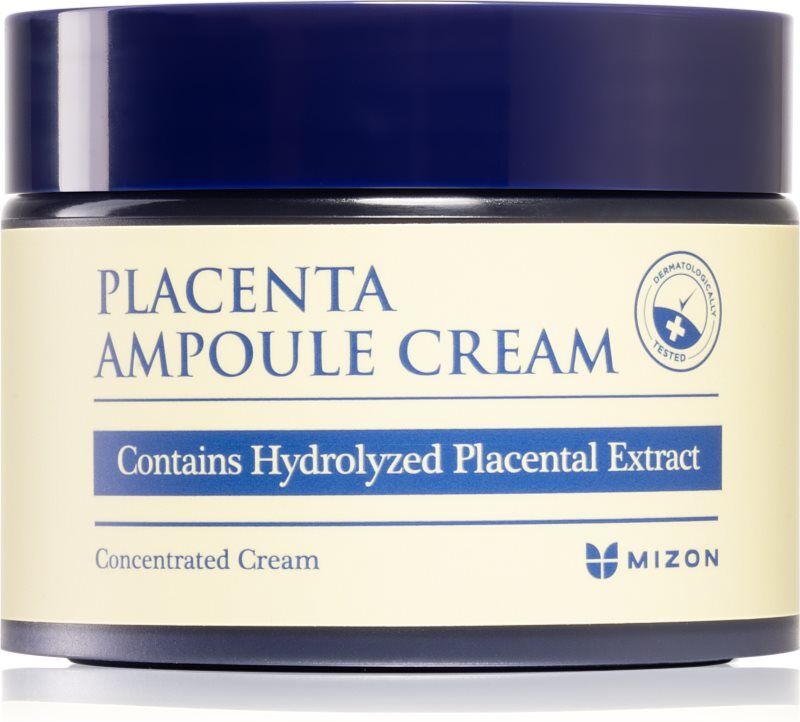
Mizon Placenta Ampoule Cream cream for skin regeneration and renewal 50 mlMizon Placenta Ampoule Cream, 50 ml, Moisturisers for Women, Don’t want to underestimate your skincare? Use a face cream every day – it’s a skincare staple that no beauty routine should do without, whatever your skin type and whatever your needs. The Mizon Placenta Ampoule Cream face cream boosts the skin’s natural function, helps keep it balanced and sufficiently hydrated and contributes towards a healthier look overall. Characteristics: regenerates and vitalises moisturises intensely How to use: Apply to clean skin and massage in using circular movements. Apply to the face, neck and chest. Use every morning and/or evening.19,80 £*Shipping: 3,99 £Secure redirect to the provider
-
APLB Amino Acid Peptide Ampoule Soothing and Firming Facial Serum 40mLA facial serum for sensitive skin. Lifts and firms sagging skin. Strengthens the skin barrier. Free from harsh ingredients. Amino Pept Cen™: Combines amino acids, peptides, and cica extract to enhance skin elasticity and soothe irritation. Hyaluronic Acid: Provides deep, lasting hydration. Lotus Leaf Extract: Rich in antioxidants to protect and calm the skin.42,19 £*Shipping: 5,28 £Secure redirect to the provider
-
Mizon Black Snail All in One Cream 35mLA facial cream for wrinkles and signs of ageing. It a truly innovative and moisturizing cream formulated with 90% snail extract. The combined synergy of 90% black snail mucus filtrate, 27 black plant extracts, adenosine, peptide and vitamin, creates a cream that cares for every skin type and any problem, providing an excellent regenerative effect.7,85 £*Shipping: 5,28 £Secure redirect to the provider
-
What are peptide bonds?
Peptide bonds are covalent bonds that link amino acids together in a protein chain. They are formed through a condensation reaction between the carboxyl group of one amino acid and the amino group of another amino acid, resulting in the release of a water molecule. Peptide bonds are crucial for maintaining the structure and function of proteins, as they determine the sequence of amino acids in a protein chain. **
-
What is correct: peptide bond?
A peptide bond is a covalent bond that forms between the carboxyl group of one amino acid and the amino group of another amino acid during protein synthesis. This bond is formed through a condensation reaction, where a molecule of water is removed. The resulting bond is a strong and stable linkage that holds the amino acids together in a protein chain. Therefore, the correct term is "peptide bond" to describe this specific type of covalent bond between amino acids. **
-
What is a peptide bond, peptide chain, peptide group, di-, tri-, and polypeptide? Can you please explain this briefly and simply? Thank you.
A peptide bond is a chemical bond that forms between the carboxyl group of one amino acid and the amino group of another amino acid. When multiple amino acids are linked together by peptide bonds, they form a peptide chain. A peptide group refers to a group of amino acids linked together by peptide bonds. A dipeptide is a chain of two amino acids, a tripeptide has three amino acids, and a polypeptide is a chain of many amino acids linked together. These chains of amino acids are the building blocks of proteins. **
-
How does hydrolysis occur during peptide cleavage?
Hydrolysis occurs during peptide cleavage when a water molecule is used to break the bond between the carboxyl group of one amino acid and the amino group of another. This process involves the addition of a water molecule to the peptide bond, resulting in the separation of the two amino acids. The water molecule donates a hydrogen ion to one amino acid and a hydroxide ion to the other, causing the bond to break and the peptide to be cleaved. This hydrolysis reaction is catalyzed by enzymes called proteases, which facilitate the cleavage of peptides in biological systems. **
Similar search terms for Mizon-Peptide-Ampoule-Cream
-
Repavar Anti-aging cream + flash ampouleHealth and Beauty Creams Repavar Anti-aging cream + flash ampoule It is a very complete treatment that combines the benefits of rosehip, collagen, and hyaluronic acid to provide hydration, firmness, comfort, and elasticity to the skin and effectively combat wrinkles. It also contains vitamin E and shea butter. Thanks to its composition, the benefits for the face can be observed in a short time: Deep hydration for skin that has lost vitality Melting cream and rich texture that leaves no greasy residue Contains no preservatives, colorants or alcohol Brighter and more radiant skin24,29 £*Shipping: 3,99 £Secure redirect to the provider
-
Mizon Collagen Power Lifting Cream Intensive Firming Solution 75mLA skin-care product for wrinkles and signs of ageing. Collagen Power Lifting Cream is an anti-aging and anti-wrinkle treatment cream that uses ingredients of natural origin and a 75% concentration of marine collagen. The formula was developed to combat the aesthetic changes caused by aging and to reduce and prevent the appearance of wrinkles and expression marks.17,72 £*Shipping: 7,03 £Secure redirect to the provider
-
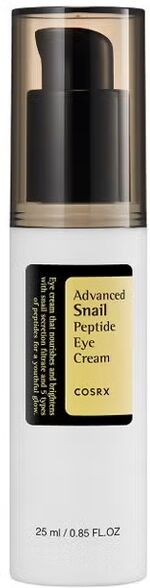
COSRX Advanced Snail Peptide Eye Cream 25mlGet rid of tired looking eyes for good with this advanced snail peptide eye cream! This non heavy, double functioning eye cream visibly brightens the eye area. This eye cream is suitable for everyone, of any age! It also effectively targets dull, dehydrated skin, fine lines & wrinkles, puffy under eyes and dark circles... Benefits Include: Firms skin, boosts radiance, reduces dark circles... Ingredients: Snail Secretion Filtrate, Butylene Glycol, Glycerin, Helianthus Annuus (Sunflower) Seed Oil, 1,2-Hexanediol, Niacinamide, Water, Palmitic Acid, Arginine, Carbomer, Stearic Acid, Betaine, Cetearyl Olivate, Sorbitan Olivate, Sodium Polyacrylate, Allantoin, Tocopheryl Acetate, Panthenol, Hydroxyethyl Acrylate/Sodium Acryloyldimethyl Taurate Copolymer, Sodium Hyaluronate, Adenosine, Xanthan Gum, Myristic Acid, Copper Tripeptide-1, Acetyl Hexapeptide-8, Palmitoyl Pentapeptide-4, Palmitoyl Tripeptide-1, Palmitoyl Tetrapeptide-723,00 £*Shipping: 2,95 £Secure redirect to the provider
-
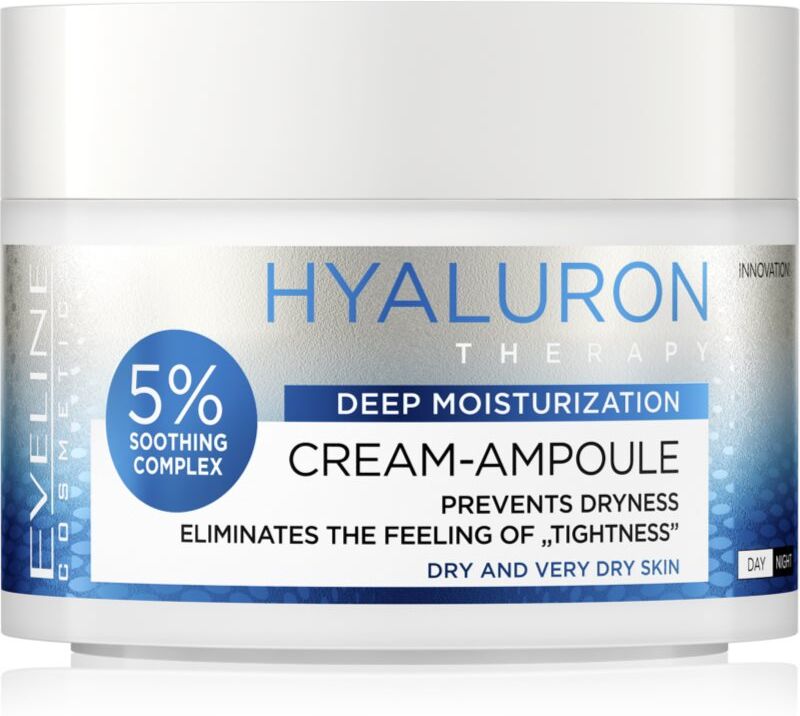
Eveline Cosmetics Cream-Ampoule Hyaluron intensive moisturising cream 50 mlEveline Cosmetics Cream-Ampoule Hyaluron, 50 ml, Moisturisers for Women, Don’t want to underestimate your skincare? Use a moisturiser every day – it’s a skincare staple that no beauty routine should do without. The Eveline Cosmetics Cream-Ampoule Hyaluron face cream gives your skin the hydration it needs, delivers relief from feelings of dryness and prevents flaky skin. It leaves the skin balanced, softened, nourished and smooth. Its moisturising effects also help fight signs of skin ageing. Characteristics: moisturises intensely nourishes deeply is absorbed quickly does not leave a greasy feeling Ingredients: vegan product provitamin B5 (panthenol) How to use: Apply to clean skin and massage in using circular movements. Apply to the face, neck and chest. Use every morning and/or evening.7,10 £*Shipping: 3,99 £Secure redirect to the provider
-
What is the stability of peptide bonds?
Peptide bonds are relatively stable under normal physiological conditions. They are formed through a condensation reaction between the carboxyl group of one amino acid and the amino group of another, resulting in the release of a water molecule. This covalent bond is strong and resistant to hydrolysis, making it stable in the presence of water. However, under extreme conditions such as high temperature or strong acids or bases, peptide bonds can be hydrolyzed, leading to the breakdown of the peptide chain. **
-
Why are peptide bonds not freely rotatable?
Peptide bonds are not freely rotatable because of the partial double bond character that arises from resonance in the peptide bond. This restricts the rotation around the bond and locks the peptide backbone into a planar structure. The resonance forms a rigid, flat structure that allows for the formation of the alpha helix and beta sheet secondary structures in proteins. This rigidity is essential for maintaining the specific three-dimensional shape and function of proteins. **
-
How does one go from DNA to peptide?
The process of going from DNA to peptide involves several steps. First, the DNA sequence is transcribed into messenger RNA (mRNA) by the enzyme RNA polymerase. The mRNA is then translated by ribosomes, which read the mRNA sequence in groups of three nucleotides called codons. Each codon corresponds to a specific amino acid, which is the building block of a peptide. As the ribosome reads the mRNA, it links together the corresponding amino acids to form a peptide chain. This chain of amino acids folds into a specific three-dimensional structure to form a functional peptide. **
-
How can one recognize mesomerically stabilized peptide bonds?
Mesomerically stabilized peptide bonds can be recognized by the presence of resonance structures in the peptide bond. This is typically observed when the peptide bond is part of a conjugated system, such as in the case of proline or in the presence of aromatic amino acids like phenylalanine or tyrosine. The presence of resonance structures indicates that the electrons in the peptide bond are delocalized, leading to increased stability. Additionally, mesomerically stabilized peptide bonds may exhibit altered reactivity compared to non-stabilized peptide bonds, making them important in the study of protein structure and function. **
* All prices are inclusive of VAT and, if applicable, plus shipping costs. The offer information is based on the details provided by the respective shop and is updated through automated processes. Real-time updates do not occur, so deviations can occur in individual cases. ** Note: Parts of this content were created by AI.