Buy heralogic.eu ?
We are moving the project
heralogic.eu .
Are you interested in purchasing the domain
heralogic.eu ?
domain@kv-gmbh.de · 0541-91531010
Buy heralogic.eu ?
What does 'du brunzkache du ogsoachte' mean?
The phrase "du brunzkache du ogsoachte" is in the Bavarian dialect of German and translates to "you're crazy, you're delusional" in English. It is used to express disbelief or to dismiss someone's ideas or actions as irrational or nonsensical. **
Do you say "Du backst" or "Du bäckst"?
The correct spelling is "Du backst." The verb "backen" is conjugated as "backst" in the second person singular form. The umlaut on the letter "a" is not used in this conjugation. **
Similar search terms for Vieux-Télégraphe-Chateauneuf-du
Top-Angebote
Products related to Vieux-Télégraphe-Chateauneuf-du:
-
Chateauneuf du Pape Rouge Isabel Ferrando 2021The Chateauneuf-du-Pape Rouge from Famille Isabel Ferrando stands out for its exuberant yet balanced personality, with great character and sunshine. This red wine comes from a skilful blend of Grenache Noir, Cinsault, Mourvèdre and Syrah grapes, with the first variety representing the elegant and sensual base while the other varietals bring fine floral essence, solid persistence and dark fullness respectively. This Chateauneuf-du-Pape, produced for the first time with the 2020 vintage, has replaced no less than three labels, representing the transition from the philosophy of parcel winemaking in the Burgundian style to that of blending according to the tradition of the terroir.The Famille Isabel Ferrando Chateauneuf-du-Pape Rouge is produced from a blend of Grenache Noir (75%), Cinsault (12%), Mourvèdre (11%) and Syrah (2%) grapes, varieties farmed organically and biodynamically on soils consisting of round pebbles, gravel, blue clay and sand. Manual harvesting is followed by red vinification through whole cluster alcoholic fermentation in cement vats. Once the fermentation process is complete, the wine is placed to age for about two years in oak barrels and terracotta amphorae until final bottling.In the glass, the Chateauneuf-du-Pape Famille Isabel Ferrando Rouge has an intense ruby red colour. Vivid aromas of cherry, strawberry, fig and black fruits describe the articulate and deep olfactory texture together with complex hints of leather, tobacco and cocoa that become more and more evident on the finish. The richness and intensity are confirmed on the palate, where the progression rests on an enveloping warmth, finely sculpted tannins and a tasty sapidity. A pleasant bitter streak then emerges on the long epilogue.110,00 £*Shipping: 48,00 £Secure redirect to the provider
-
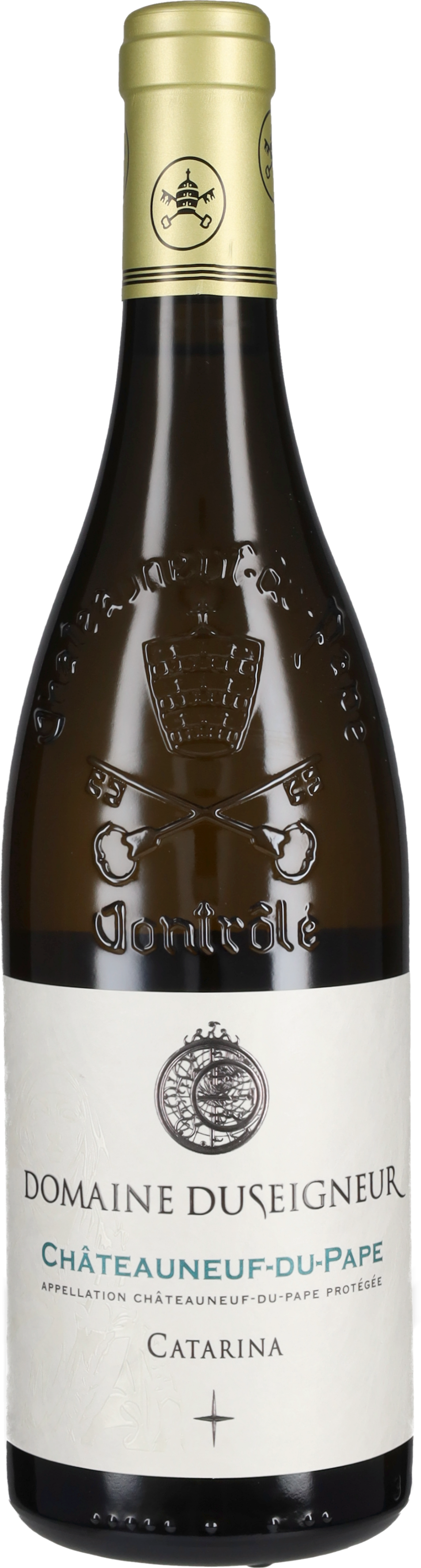
Chateauneuf Du Pape 'Haute Pierre' Delas Freres 2022Il Châteauneuf-du-Pape “Haute Pierre” di Delas Frères nasce nella Valle del Rodano nella parte Sud della Francia. La cantina viene considerata un punto di riferimento importante per la produzione vitivinicola della zona: l’attività inizia nel 1996 grazie a Fabrice Rosset che prende in consegna il lavoro svolto precedentemente, riscoprendo l’anima e lo splendore antico. Il progetto prevedeva un rinnovamento qualitativo della cantina, iniziando dalla ristrutturazione dell’edificio, per poi dedicarsi a dettagli come tini dedicati alla vinificazione di vini rossi. La produzione della cantina copre un’ampia gamma di vini delle pregiate Appellation per vini dalla qualità insuperabile. I vigneti dello Châteauneuf-du-Pape “Haute Pierre” di Delas Frères si estendono su quasi tutto il comune di Châteauneuf-du-Pape su un terreno prevalentemente composto da sedimenti sassosi e presenza di quarzi laminati misti ad argilla rossa e sabbiosa. Il clima è principalmente continentale con un irradiamento solare ampio durante l’estate e un vento maestrale che libera i filari dall’umidità; di notte il calore accumulato durante il giorno nel suolo sassoso si sprigiona creando un effetto “forno”, dal momento che questo viene considerato come il settore più arido. La vendemmia è condotta manualmente; in cantina i grappoli vengono diraspati, e pigiati in tini di cemento dove si svolge anche la fermentazione alcolica per 10 giorni. Segue una macerazione di 8 giorni e una fermentazione malolattica finale. Alla vista il colore del Châteauneuf-du-Pape “Haute Pierre” di Delas Frères è granato scuro con riflessi intensi. I profumi ricordano intensi aromi di spezie, frutti rossi e liquirizia; in bocca il corpo è ricco e concentrato con la presenza di tannini fini e fitti ben integrati nella struttura per una beva unica e interessante. Il vino si sposa meravigliosamente con i tagli di carne tipici della tradi49,00 £*Shipping: 48,00 £Secure redirect to the provider


-
Is it said "Du backst" or "Du bäckst"?
The correct form is "Du backst." The verb "backen" means "to bake" in German, and when conjugated for the second person singular (du), it takes the form "backst." The umlaut (ä) in "bäckst" is incorrect in this context. **
-
Does it say "Du backst" or "Du bäckst"?
It says "Du backst." The verb "backen" (to bake) is conjugated as "backst" in the second person singular form in the present tense. The form "Du bäckst" would be incorrect in standard German. **
-
Does it say "Du hältst" or "Du hältst"?
It says "Du hältst." **
-
Why do we say "du hältst" but not "du setzt" instead "du setzt dich"?
In German, the verb "setzen" typically requires a direct object, so when using it in the second person singular form, it is often accompanied by a reflexive pronoun to indicate that the action is being performed on oneself. This is why we say "du setzt dich" instead of just "du setzt." On the other hand, the verb "halten" does not require a direct object, so it can be used on its own without a reflexive pronoun, resulting in "du hältst." This distinction in usage is a characteristic of the German language and its grammar rules. **

What does "Du weißt nicht, was du willst?" mean?
"Du weißt nicht, was du willst?" is a German phrase that translates to "You don't know what you want?" in English. It is often used to express frustration or confusion towards someone who seems indecisive or unsure about their desires or intentions. The phrase can be used in various contexts, such as in relationships, decision-making, or when someone is being wishy-washy about their choices. **
Why is it "du nutzt" and not "du nutzst"?
The verb "nutzen" is an irregular verb in German, and its conjugation in the present tense for the second person singular (du) is "du nutzt" instead of "du nutzst." This irregularity is due to the vowel change in the stem of the verb. In German, some verbs undergo a vowel change in the stem in the present tense conjugation, and "nutzen" is one of those verbs. Therefore, the correct form is "du nutzt" to follow the irregular conjugation pattern of the verb "nutzen." **
Top-Angebote
Products related to Vieux-Télégraphe-Chateauneuf-du:
-
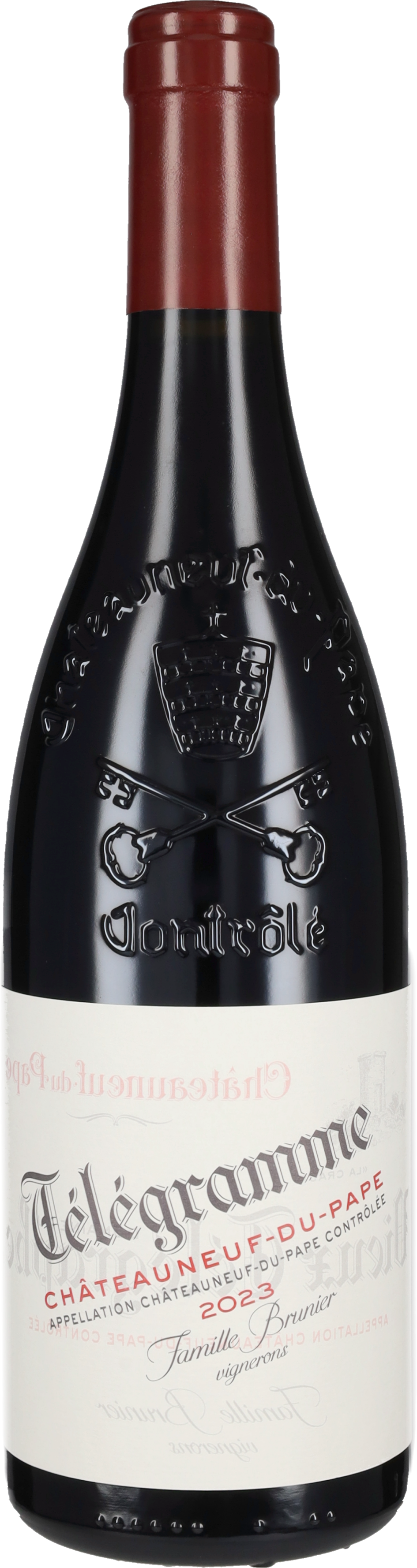
Vieux Télégraphe Chateauneuf du Pape Rouge 'Telegramme' Vieux Telegraph 2023The Chateauneuf-du-Pape Rouge ‘Telegramme’ from the French estate Vieux Telegraph is a label that stands out for intensity, structure, and roundness, an authentic expression of the style of Domaine. The ‘Telegramme’ is the second most prestigious label of the winery, resulting from the combination of grapes from the younger vines located in the prized areas of La Crau and Piedlong and those from old vines not included in these territories. The name of the Domaine, which literally means “old telegraph,” derives from the fact that in La Crau, a historic plot that the Brunier family has been cultivating since the late 1800s, a repeater tower was installed in 1821 by Claude Chappe, the inventor of the optical telegraph.The ‘Telegramme’ Domaine du Vieux Telegraphe Chateauneuf-du-Pape Rouge consists of a blend of Grenache Noir (80%), Syrah (10%), Mourvèdre (6%), and Cinsault (4%), varieties grown on different types of soil, generally characterized by an abundant presence of round pebbles. The harvest is done by hand with a triple selection, both in the vineyard and in the winery, and is followed by the destemming of the bunches, which are then pressed in stainless steel tanks for alcoholic fermentation at controlled temperature with skin maceration. Once malolactic fermentation is also completed, the mass is aged in large French oak barrels of 30 and 60 hectoliters for a long aging period of 15-16 months. Throughout the entire process, the use of clarification or filtration operations is excluded.The Chateauneuf-du-Pape Rouge ‘Telegramme’ from Domaine du Vieux Telegraphe has an intense ruby red color. The nose reveals vivid and generous sensations of ripe plum and cherry, combined with deep hints of cocoa and licorice. Warm and intense tasting, endowed with a meaty tannic structure that rests on a long-lasting finish.57,00 £*Shipping: 48,00 £Secure redirect to the provider
-
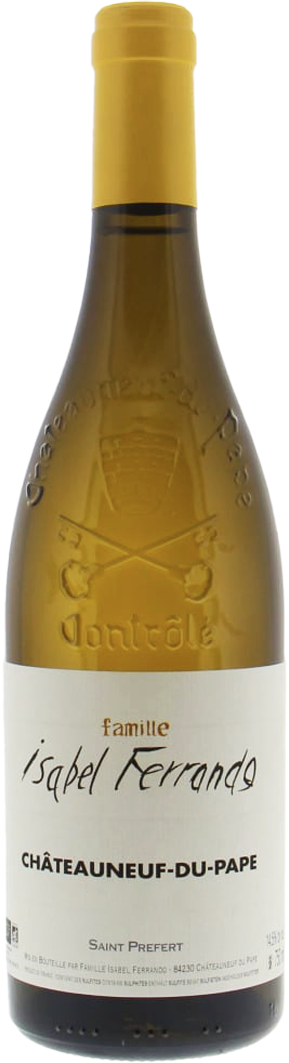
Chateauneuf du Pape Blanc Isabel Ferrando 2022The Chateauneuf-du-Pape Blanc from the French Famille Isabel Ferrando is a white wine of formidable intensity and richness, the result of a blend of Clairette and Roussanne, traditional white grape varieties from the Chateauneuf-du-Pape area. In particular, the Clairette gives freshness and salinity while the Roussanne contributes to the wine's sensual softness. This prestigious label, produced for the first time with the 2021 vintage as the successor to Domaine Saint Préfert Chateauneuf-du-Pape Blanc, is the expression of a 2-hectare plot in the Saint-Prefert area, the winery's production heartland.Famille Isabel Ferrando Chateauneuf-du-Pape Blanc consists of a blend of Clairette (60%) and Roussanne (40%), varieties cultivated according to the dictates of organic and biodynamic agriculture on soils rich in round pebbles, blue clays, gravel and sand. Harvesting is carried out by hand and is followed by spontaneous alcoholic fermentation in cement vats, with the subsequent maturation phase taking place in oak barrels and special spherical glass containers known as 'wineglobe'. In these containers, the wine rests for 6 months until final bottling, and during the entire process any intervention or invasive manipulation is excluded.The Chateauneuf-du-Pape Famille Isabel Ferrando Blanc has a soft, luminous golden yellow colour. The rich bouquet opens on intriguing floral hints of dog rose, jasmine and acacia flowers, followed by notes of pear, peach jam and sweet spices. Very intense, juicy and energetic on the palate, the balanced freshness and marked sapid-mineral vein accompanying the final persistence, supporting the full body and enveloping softness.113,00 £*Shipping: 48,00 £Secure redirect to the provider
-
Chateauneuf du Pape Rouge Isabel Ferrando 2021The Chateauneuf-du-Pape Rouge from Famille Isabel Ferrando stands out for its exuberant yet balanced personality, with great character and sunshine. This red wine comes from a skilful blend of Grenache Noir, Cinsault, Mourvèdre and Syrah grapes, with the first variety representing the elegant and sensual base while the other varietals bring fine floral essence, solid persistence and dark fullness respectively. This Chateauneuf-du-Pape, produced for the first time with the 2020 vintage, has replaced no less than three labels, representing the transition from the philosophy of parcel winemaking in the Burgundian style to that of blending according to the tradition of the terroir.The Famille Isabel Ferrando Chateauneuf-du-Pape Rouge is produced from a blend of Grenache Noir (75%), Cinsault (12%), Mourvèdre (11%) and Syrah (2%) grapes, varieties farmed organically and biodynamically on soils consisting of round pebbles, gravel, blue clay and sand. Manual harvesting is followed by red vinification through whole cluster alcoholic fermentation in cement vats. Once the fermentation process is complete, the wine is placed to age for about two years in oak barrels and terracotta amphorae until final bottling.In the glass, the Chateauneuf-du-Pape Famille Isabel Ferrando Rouge has an intense ruby red colour. Vivid aromas of cherry, strawberry, fig and black fruits describe the articulate and deep olfactory texture together with complex hints of leather, tobacco and cocoa that become more and more evident on the finish. The richness and intensity are confirmed on the palate, where the progression rests on an enveloping warmth, finely sculpted tannins and a tasty sapidity. A pleasant bitter streak then emerges on the long epilogue.110,00 £*Shipping: 48,00 £Secure redirect to the provider
-
What does 'du brunzkache du ogsoachte' mean?
The phrase "du brunzkache du ogsoachte" is in the Bavarian dialect of German and translates to "you're crazy, you're delusional" in English. It is used to express disbelief or to dismiss someone's ideas or actions as irrational or nonsensical. **
-
Do you say "Du backst" or "Du bäckst"?
The correct spelling is "Du backst." The verb "backen" is conjugated as "backst" in the second person singular form. The umlaut on the letter "a" is not used in this conjugation. **
-
Is it said "Du backst" or "Du bäckst"?
The correct form is "Du backst." The verb "backen" means "to bake" in German, and when conjugated for the second person singular (du), it takes the form "backst." The umlaut (ä) in "bäckst" is incorrect in this context. **
-
Does it say "Du backst" or "Du bäckst"?
It says "Du backst." The verb "backen" (to bake) is conjugated as "backst" in the second person singular form in the present tense. The form "Du bäckst" would be incorrect in standard German. **
Similar search terms for Vieux-Télégraphe-Chateauneuf-du
-
Chateauneuf Du Pape 'Haute Pierre' Delas Freres 2022Il Châteauneuf-du-Pape “Haute Pierre” di Delas Frères nasce nella Valle del Rodano nella parte Sud della Francia. La cantina viene considerata un punto di riferimento importante per la produzione vitivinicola della zona: l’attività inizia nel 1996 grazie a Fabrice Rosset che prende in consegna il lavoro svolto precedentemente, riscoprendo l’anima e lo splendore antico. Il progetto prevedeva un rinnovamento qualitativo della cantina, iniziando dalla ristrutturazione dell’edificio, per poi dedicarsi a dettagli come tini dedicati alla vinificazione di vini rossi. La produzione della cantina copre un’ampia gamma di vini delle pregiate Appellation per vini dalla qualità insuperabile. I vigneti dello Châteauneuf-du-Pape “Haute Pierre” di Delas Frères si estendono su quasi tutto il comune di Châteauneuf-du-Pape su un terreno prevalentemente composto da sedimenti sassosi e presenza di quarzi laminati misti ad argilla rossa e sabbiosa. Il clima è principalmente continentale con un irradiamento solare ampio durante l’estate e un vento maestrale che libera i filari dall’umidità; di notte il calore accumulato durante il giorno nel suolo sassoso si sprigiona creando un effetto “forno”, dal momento che questo viene considerato come il settore più arido. La vendemmia è condotta manualmente; in cantina i grappoli vengono diraspati, e pigiati in tini di cemento dove si svolge anche la fermentazione alcolica per 10 giorni. Segue una macerazione di 8 giorni e una fermentazione malolattica finale. Alla vista il colore del Châteauneuf-du-Pape “Haute Pierre” di Delas Frères è granato scuro con riflessi intensi. I profumi ricordano intensi aromi di spezie, frutti rossi e liquirizia; in bocca il corpo è ricco e concentrato con la presenza di tannini fini e fitti ben integrati nella struttura per una beva unica e interessante. Il vino si sposa meravigliosamente con i tagli di carne tipici della tradi49,00 £*Shipping: 48,00 £Secure redirect to the provider
-
Does it say "Du hältst" or "Du hältst"?
It says "Du hältst." **
-
Why do we say "du hältst" but not "du setzt" instead "du setzt dich"?
In German, the verb "setzen" typically requires a direct object, so when using it in the second person singular form, it is often accompanied by a reflexive pronoun to indicate that the action is being performed on oneself. This is why we say "du setzt dich" instead of just "du setzt." On the other hand, the verb "halten" does not require a direct object, so it can be used on its own without a reflexive pronoun, resulting in "du hältst." This distinction in usage is a characteristic of the German language and its grammar rules. **
-
What does "Du weißt nicht, was du willst?" mean?
"Du weißt nicht, was du willst?" is a German phrase that translates to "You don't know what you want?" in English. It is often used to express frustration or confusion towards someone who seems indecisive or unsure about their desires or intentions. The phrase can be used in various contexts, such as in relationships, decision-making, or when someone is being wishy-washy about their choices. **
-
Why is it "du nutzt" and not "du nutzst"?
The verb "nutzen" is an irregular verb in German, and its conjugation in the present tense for the second person singular (du) is "du nutzt" instead of "du nutzst." This irregularity is due to the vowel change in the stem of the verb. In German, some verbs undergo a vowel change in the stem in the present tense conjugation, and "nutzen" is one of those verbs. Therefore, the correct form is "du nutzt" to follow the irregular conjugation pattern of the verb "nutzen." **
* All prices are inclusive of VAT and, if applicable, plus shipping costs. The offer information is based on the details provided by the respective shop and is updated through automated processes. Real-time updates do not occur, so deviations can occur in individual cases. ** Note: Parts of this content were created by AI.