Buy heralogic.eu ?
We are moving the project
heralogic.eu .
Are you interested in purchasing the domain
heralogic.eu ?
domain@kv-gmbh.de · 0541-91531010
Buy heralogic.eu ?
Why was Catalan banned under Franco?
Catalan was banned under Franco's regime because he sought to suppress regional identities and promote a unified Spanish identity. Franco believed that allowing regional languages like Catalan to be spoken and taught in schools would undermine his efforts to centralize power and control over the country. By banning Catalan, Franco aimed to assert his authority and enforce a homogenous Spanish culture across the country. **
Why was the statue of Franco removed?
The statue of Franco was removed because it symbolized the oppressive regime and human rights abuses that occurred during his dictatorship in Spain. Many people viewed the statue as a glorification of a dark period in Spanish history and a reminder of the suffering endured by those who opposed Franco's rule. Removing the statue was seen as a step towards acknowledging and reckoning with the past, promoting reconciliation, and moving towards a more democratic and inclusive society. **

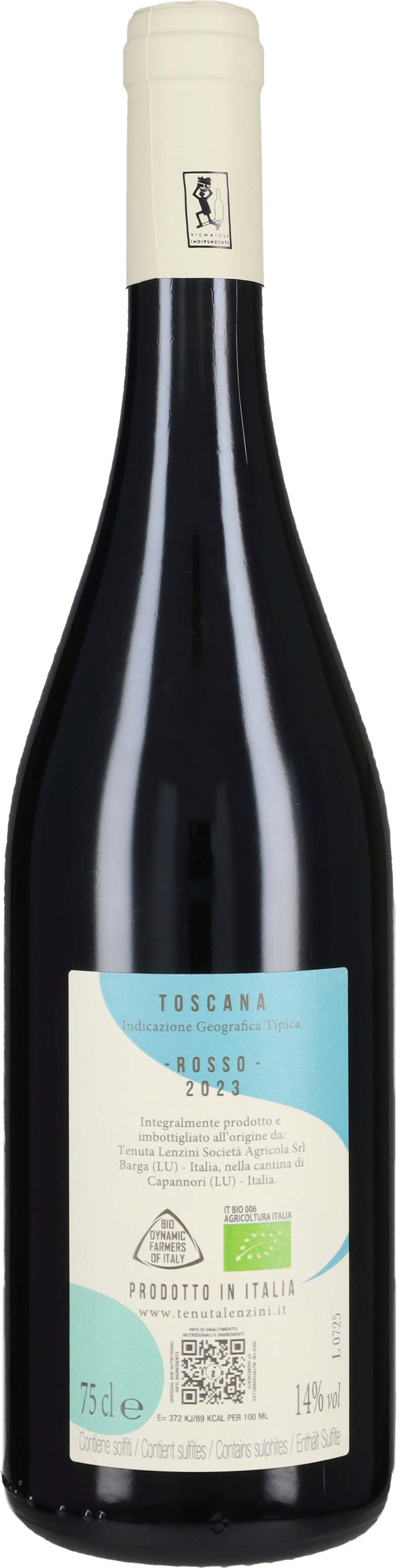
Similar search terms for Franco-Tenuta-Lenzini-2024
Top-Angebote
Products related to Franco-Tenuta-Lenzini-2024:
-
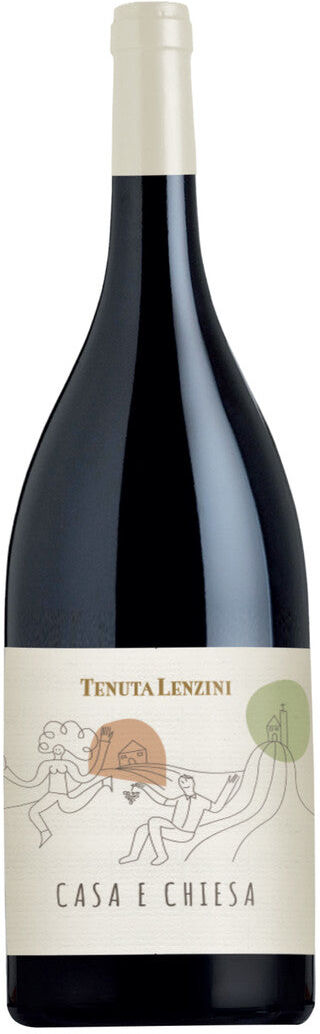
Casa e Chiesa' Magnum Tenuta Lenzini 2024“Casa e Chiesa” Magnum is a Merlot genuine, simple, and fresh produced by one of the most convincing and interesting realities of the Lucca hills. “There are aromatic nuances you don’t expect; sensory alchemies that can only be explained by rediscovering the expressiveness of nature, the origins of a territory.” With this phrase, we can summarize the thoughts of Michele and Benedetta Lenzini, two young wine artisans, bound in life and by the vine. The talented couple tends to the 24 hectares inherited from their grandfather with an extremely sensitive approach, rigorously applying the pure principles of biodynamics. Simplicity, talent, and passion are reflected in this everyday and convivial red, which tells the nature of the fruit in its juiciest and most pleasant form with disarming simplicity. A juice of the territory particularly appreciated for its exquisitely gastronomic and genuine soul! The Magnum Rosso “Casa e Chiesa” by Lenzini takes its name from the location where the vineyards are found, situated,indeed, between the house of Michele-Benedetta and the church of the small village of Gragnano. The Merlot vines have acclimatized to these lands for centuries and grow lushly in a living, pure soil rich in biodiversity. A "reasoned viticulture", as defined by the winery, allows for the production of healthy grapes that tell the moods of the vintage and the naturalness of the land. In the winery, similarly, they continue with what the winery defines as "emotional enology". This is a non-invasive approach that prohibits any form of intervention on the must such as clarifications, filtrations, or the addition of sulfites. Fermentation occurs spontaneously through the intervention of indigenous yeasts in vats without any temperature control. This is followed by aging in steel and cement for about 24 months. Magnum "Casa e Chiesa" shows a dark and concentrated veil reminiscent of ruby tones. The nose is a celebration of juicy fruit in dark hues: wild blackberries, plum, and black berries. Notes of earth, woodland fragrances, peppery and light brushstrokes.underbrush nuances amplify and enrich the bouquet. On the palate, the freshness, delicious, rustic, and satisfying dominates, tempered by the innate roundness and fleshiness of the variety. A drinkable, sincere, and pleasant sip, toned by an intense tannic structure. Irresistible Magnum format!34,00 £*Shipping: 48,00 £Secure redirect to the provider
-
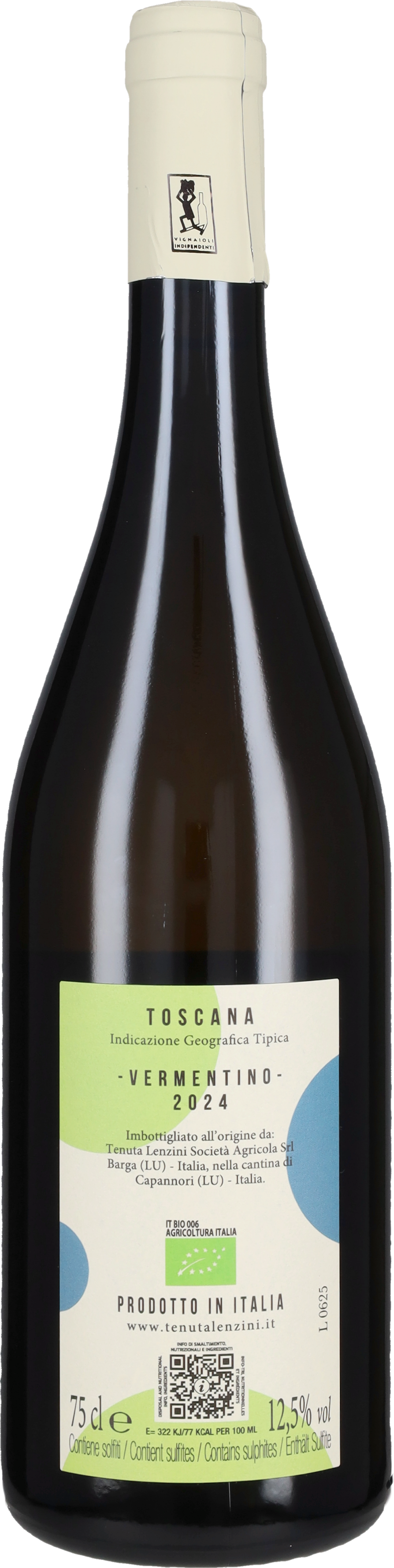
Vermignon' Tenuta Lenzini 2025The “Vermignon” from Tenuta Lenzini is a fresh, savory, and fragrant white wine, produced from a skillful blend of Vermentino and Sauvignon Blanc grapes, grown on the green hills of Lucca in the small town of Gragnano. Here, Benedetta and Michele tend to their vineyards with full respect for nature and its expressiveness according to the principles of biodynamic philosophy, convinced that to obtain a wine that fully tells the story of the territory from which it comes, there is no need for chemical artifices. They believe that the bare minimum is simply to take care of the countryside in a careful and non-invasive way so that it can offer its best and most authentic fruits. The Tenuta Lenzini “Vermignon” is made with meticulous attention to the soil processing, which does not undergo synthetic treatments; copper and sulfur are used only as strictly necessary. Indigenous yeasts and spontaneous fermentation are essential, and the use of sulfites is minimized, with a light maceration on the skins for one day and the aging takes place in steel for six months. Everything is designed so that the fruit is not altered and can express itself in its full authenticity. The “Vermignon” from Tenuta Lenzini is dressed in a full straw yellow, don’t worry if there is some haze: it is harmless and natural. On the nose and palate, it combines the fresh, slightly citrusy soul and good savoriness of Vermentino with the vivaciously aromatic character of Sauvignon Blanc, made up of delicately herbal notes and enticing aromas of aromatic herbs. The sip flows light and refreshing, with a rightly moderate savoriness and without excess, perfect to drink immediately and in company, perhaps in front of a tasty spaghetti with clams or a tartare of red shrimp.26,00 £*Shipping: 48,00 £Secure redirect to the provider
-
La Syrah' Tenuta Lenzini 2023"La Syrah" from Tenuta Lenzini is a Tuscan red produced in the territory of the Colline Lucchesi, made with pure Syrah. The great red grape variety native to the Rhône Valley has acclimatized well to the sunny and windy hills of this corner of Tuscany, east of the city of Lucca and not far from the Tyrrhenian coast. Vinified entirely in wood, with a long aging process, it is a red that beautifully expresses the seductive aromatic richness of the Syrah grape, its ripe and generous fruit, and its peculiar and unmistakable elegantly spiced nuances. The red "La Syrah" is a beautiful version of this French variety, which has acclimatized well in Tuscany, producing some of the most interesting labels in our peninsula in this region. Tenuta Lenzini extends over 23 hectares, of which only 13 are planted with vines, managed since 2007 under the principles of biodynamic agriculture using only sulfur, copper, and plant preparations. The winery was born with the idea of creating healthy and genuine wines, produced in harmony with nature and the surrounding environment. The production philosophy aims to always highlight the varietal character of the grapes and the influence of the terroir, with minimal intervention in the winery. Fermentation takes place in tubs and tonneaux, using only indigenous yeasts. Before being bottled, the wine rests for 24 months in large barrels and French oak tonneaux. The wine "La Syrah" from Tenuta Lenzini is a label capable of faithfully and rigorously bringing the varietal characteristics into the glass. In the glass, it has an intense ruby red color. On the nose, it opens up to aromas of small dark berries, underbrush, Mediterranean scrub herbs, ink, graphite, and spices. The sip is rich and smooth, with dense aromas, and a tannic structure in proper relief. The finish is spicy and very persistent.34,00 £*Shipping: 48,00 £Secure redirect to the provider
-
Casa e Chiesa' Tenuta Lenzini 2025“Casa e Chiesa” is a Merlot genuine, simple and fresh produced by one of the most convincing and interesting realities of the Lucca hills. “There are aromatic nuances that you do not expect; sensory alchemies that can only be explained by rediscovering the expressiveness of nature, the origins of a territory.” With this phrase we can summarize the thoughts of Michele and Benedetta Lenzini, two young wine artisans, bound in life and by the vine. The talented young people take care of the 24 hectares inherited from their grandfather with an extremely sensitive approach, rigorously applying the pure principles of biodynamics. Simplicity, talent and passion are reflected in this everyday and convivial red, which tells with disarming simplicity the nature of the fruit in its juiciest and most pleasant form. A juice of territory particularly appreciated for its exquisitely gastronomic and genuine soul! The Red “Casa e Chiesa” by Lenzini takes its name from the locality where the vineyards are located, in fact, between the house of Michele-Benedetta and the church of the small village of Gragnano. The Merlot vines have acclimatized in these lands for centuries and grow lush in a living, pure and rich in biodiversity soil. A “reasoned viticulture”, as defined by the winery, allows for healthy grapes that tell the moods of the vintage and the naturalness of the land. In the winery, in the same way, they continue with what the winery defines as “emotional enology”. This is a non-invasive approach that prohibits any form of intervention on the must such as clarifications, filtrations or addition of sulfites. Fermentations occur spontaneously through the intervention of indigenous yeasts in vats without any temperature control. This is followed by aging in steel and cement for about 24 months. “Casa e Chiesa” shows a dark and concentrated veil that recalls the shade of ruby. The nose is a triumph of juicy fruit in dark hues: wild blackberries, plums and black berries. Earthy notes, forest fragrances, peppery brushstrokes and light underbrush nuances amplify and enrich the bouquet. On the palate, the freshness, delicious, rustic and satisfying dominates, tempered by the innate roundness and fleshiness of the variety. A drinkable, sincere and pleasant sip, toned by an intense tannic structure. Irresistible!16,00 £*Shipping: 48,00 £Secure redirect to the provider


-
Has Franco done anything significant for Europe?
Franco's regime in Spain was known for its authoritarian rule and human rights abuses, which had a significant impact on Europe during his time in power. His support for fascist ideologies and alliances with other dictators in Europe, such as Hitler and Mussolini, contributed to the destabilization of the continent during World War II. Additionally, Franco's regime was isolated by many European countries due to its oppressive policies and lack of democracy. Overall, Franco's impact on Europe was largely negative and his actions did not contribute positively to the region. **
-
What do Spaniards think about Franco today?
Opinions about Franco in Spain today are divided. Some Spaniards, particularly those on the political right, still view Franco as a strong leader who brought stability to the country. However, many others, especially on the left, see him as a dictator who oppressed political dissent and committed human rights abuses. There is ongoing debate about how to remember Franco's legacy, with some calling for his regime to be condemned and others arguing that it is a part of Spain's history that should not be forgotten. Overall, Franco remains a controversial and divisive figure in Spanish society. **
-
Who would win, James Franco or Robert Pattinson?
It is difficult to determine who would win in a hypothetical fight between James Franco and Robert Pattinson as there are many factors to consider, such as their physical abilities, fighting skills, and personal attributes. Both actors have portrayed a variety of characters in their careers, and it is important to remember that their on-screen personas do not necessarily reflect their real-life abilities. Ultimately, it is not productive to speculate on the outcome of a physical altercation between two individuals. **
-
How does Franco differ from Hitler and Mussolini?
Franco differed from Hitler and Mussolini in several ways. Firstly, while Hitler and Mussolini were both fervent believers in fascist ideology, Franco's regime in Spain was more of a traditional authoritarian dictatorship. Secondly, Franco's rise to power was not as aggressive or expansionist as Hitler and Mussolini's, as he focused more on consolidating power within Spain rather than seeking to conquer other territories. Additionally, Franco's regime was more closely aligned with conservative Catholic values, whereas Hitler and Mussolini's regimes were more secular in nature. Overall, while all three leaders were authoritarian, Franco's regime had distinct differences in ideology and approach compared to Hitler and Mussolini. **


Is the monarchy justified after the Franco dictatorship?
The justification of the monarchy after the Franco dictatorship is a complex and debated issue in Spain. Some argue that the monarchy played a role in the transition to democracy and helped stabilize the country after Franco's regime. Others believe that the monarchy is a symbol of an outdated and undemocratic system, and that Spain should transition to a republic. Ultimately, the question of whether the monarchy is justified after the Franco dictatorship is subjective and depends on individual perspectives on the role of the monarchy in contemporary Spanish society. **
In which season does Dave Franco appear in Scrubs?
Dave Franco appears in the TV show Scrubs during the ninth and final season. He plays the character Cole Aaronson, a medical student at the fictional Winston University. Franco's character becomes a recurring role throughout the season, adding a new dynamic to the show's ensemble cast. His appearance in Scrubs helped to further establish him as a talented actor in the industry. **
Top-Angebote
Products related to Franco-Tenuta-Lenzini-2024:
-
Franco' Tenuta Lenzini 2024The ‘Franco’ from Tenuta Lenzini is one of the latest arrivals at Tenuta Lenzini: a Cabernet Franc that aims to pay homage to the founder of the winery: Franco, Benedetta's grandfather, who is now leading the estate together with her husband Michele. A red with a Tuscan soul produced in Gragnano, in the heart of the Lucchese hills, made with passion and craftsmanship, without frills or added chemicals. “Benedetta's grandfather has returned,” exclaims Michele Guarino on his social channels, “and it is thanks to him that this estate exists today as you know it!”. The Cabernet Franc ‘Franco’ Tenuta Lenzini is a very recognizable red, both on the nose and in the mouth, breaking a bit the paradigms of the ‘classic’ Tuscany always devoted solely to Sangiovese. Here at Tenuta Lenzini, international grape varieties such as Merlot, Syrah, and Cabernet have always been at home, precisely since the 16th century when Napoleon's troops crossed these areas, where the Via Francigena passed. In this case, the winemaking is classic: fermentation is activated with only indigenous yeasts and takes place in cement tanks, while aging lasts for 6 months in steel and terracotta vats. The ‘Franco’ signed Tenuta Lenzini is a pure Cabernet Franc with a sensory profile that is easily recognizable and recalls the typical characteristics of the starting variety. The color is intense red with ruby highlights, on the nose it emanates vegetal aromas of green pepper and tomato leaf with evident references to the earth and wild herbs. Its uniqueness is definitely the taste: the sip is soft and enveloping, but the alcohol content is low, thus imparting a greater lightness to the drinker’s palate. A summer red then? No, even better: a wine for all seasons!23,00 £*Shipping: 48,00 £Secure redirect to the provider
-
Poggio de' Paoli' Tenuta Lenzini 2024the preparation 500 is applied followed by the sowing, between the rows, of legumes and aromatic herbs in order to keep the soils fertile during the resting period of the vines. In spring, after mowing, cornosilice is applied which stimulates the photosynthesis of the plants. In the cellar, fermentation is spontaneous with indigenous yeasts in a tub. The wine then ages for 24 months first in large barrels, then in tonneau, and finally in steel, giving first softness to the liquid and then definition. To ensure that this wine maintains and expresses the characteristics of the terroir, the use of sulfites is limited to the bare minimum.the preparation 500 is applied followed by the sowing, between the rows, of legumes and aromatic herbs in order to keep the soils fertile during the resting period of the vines. In spring, after mowing, cornosilice is applied which stimulates the photosynthesis of the plants. In the cellar, fermentation is spontaneous with indigenous yeasts in a tub. The wine then ages for 24 months first in large barrels, then in tonneau, and finally in steel, giving first softness to the liquid and then definition. To ensure that this wine maintains and expresses the characteristics of the terroir, the use of sulfites is limited to the bare minimum.without however giving up the juice and freshness.23,00 £*Shipping: 48,00 £Secure redirect to the provider
-
Casa e Chiesa' Magnum Tenuta Lenzini 2024“Casa e Chiesa” Magnum is a Merlot genuine, simple, and fresh produced by one of the most convincing and interesting realities of the Lucca hills. “There are aromatic nuances you don’t expect; sensory alchemies that can only be explained by rediscovering the expressiveness of nature, the origins of a territory.” With this phrase, we can summarize the thoughts of Michele and Benedetta Lenzini, two young wine artisans, bound in life and by the vine. The talented couple tends to the 24 hectares inherited from their grandfather with an extremely sensitive approach, rigorously applying the pure principles of biodynamics. Simplicity, talent, and passion are reflected in this everyday and convivial red, which tells the nature of the fruit in its juiciest and most pleasant form with disarming simplicity. A juice of the territory particularly appreciated for its exquisitely gastronomic and genuine soul! The Magnum Rosso “Casa e Chiesa” by Lenzini takes its name from the location where the vineyards are found, situated,indeed, between the house of Michele-Benedetta and the church of the small village of Gragnano. The Merlot vines have acclimatized to these lands for centuries and grow lushly in a living, pure soil rich in biodiversity. A "reasoned viticulture", as defined by the winery, allows for the production of healthy grapes that tell the moods of the vintage and the naturalness of the land. In the winery, similarly, they continue with what the winery defines as "emotional enology". This is a non-invasive approach that prohibits any form of intervention on the must such as clarifications, filtrations, or the addition of sulfites. Fermentation occurs spontaneously through the intervention of indigenous yeasts in vats without any temperature control. This is followed by aging in steel and cement for about 24 months. Magnum "Casa e Chiesa" shows a dark and concentrated veil reminiscent of ruby tones. The nose is a celebration of juicy fruit in dark hues: wild blackberries, plum, and black berries. Notes of earth, woodland fragrances, peppery and light brushstrokes.underbrush nuances amplify and enrich the bouquet. On the palate, the freshness, delicious, rustic, and satisfying dominates, tempered by the innate roundness and fleshiness of the variety. A drinkable, sincere, and pleasant sip, toned by an intense tannic structure. Irresistible Magnum format!34,00 £*Shipping: 48,00 £Secure redirect to the provider
-
Vermignon' Tenuta Lenzini 2025The “Vermignon” from Tenuta Lenzini is a fresh, savory, and fragrant white wine, produced from a skillful blend of Vermentino and Sauvignon Blanc grapes, grown on the green hills of Lucca in the small town of Gragnano. Here, Benedetta and Michele tend to their vineyards with full respect for nature and its expressiveness according to the principles of biodynamic philosophy, convinced that to obtain a wine that fully tells the story of the territory from which it comes, there is no need for chemical artifices. They believe that the bare minimum is simply to take care of the countryside in a careful and non-invasive way so that it can offer its best and most authentic fruits. The Tenuta Lenzini “Vermignon” is made with meticulous attention to the soil processing, which does not undergo synthetic treatments; copper and sulfur are used only as strictly necessary. Indigenous yeasts and spontaneous fermentation are essential, and the use of sulfites is minimized, with a light maceration on the skins for one day and the aging takes place in steel for six months. Everything is designed so that the fruit is not altered and can express itself in its full authenticity. The “Vermignon” from Tenuta Lenzini is dressed in a full straw yellow, don’t worry if there is some haze: it is harmless and natural. On the nose and palate, it combines the fresh, slightly citrusy soul and good savoriness of Vermentino with the vivaciously aromatic character of Sauvignon Blanc, made up of delicately herbal notes and enticing aromas of aromatic herbs. The sip flows light and refreshing, with a rightly moderate savoriness and without excess, perfect to drink immediately and in company, perhaps in front of a tasty spaghetti with clams or a tartare of red shrimp.26,00 £*Shipping: 48,00 £Secure redirect to the provider
-
Why was Catalan banned under Franco?
Catalan was banned under Franco's regime because he sought to suppress regional identities and promote a unified Spanish identity. Franco believed that allowing regional languages like Catalan to be spoken and taught in schools would undermine his efforts to centralize power and control over the country. By banning Catalan, Franco aimed to assert his authority and enforce a homogenous Spanish culture across the country. **
-
Why was the statue of Franco removed?
The statue of Franco was removed because it symbolized the oppressive regime and human rights abuses that occurred during his dictatorship in Spain. Many people viewed the statue as a glorification of a dark period in Spanish history and a reminder of the suffering endured by those who opposed Franco's rule. Removing the statue was seen as a step towards acknowledging and reckoning with the past, promoting reconciliation, and moving towards a more democratic and inclusive society. **
-
Has Franco done anything significant for Europe?
Franco's regime in Spain was known for its authoritarian rule and human rights abuses, which had a significant impact on Europe during his time in power. His support for fascist ideologies and alliances with other dictators in Europe, such as Hitler and Mussolini, contributed to the destabilization of the continent during World War II. Additionally, Franco's regime was isolated by many European countries due to its oppressive policies and lack of democracy. Overall, Franco's impact on Europe was largely negative and his actions did not contribute positively to the region. **
-
What do Spaniards think about Franco today?
Opinions about Franco in Spain today are divided. Some Spaniards, particularly those on the political right, still view Franco as a strong leader who brought stability to the country. However, many others, especially on the left, see him as a dictator who oppressed political dissent and committed human rights abuses. There is ongoing debate about how to remember Franco's legacy, with some calling for his regime to be condemned and others arguing that it is a part of Spain's history that should not be forgotten. Overall, Franco remains a controversial and divisive figure in Spanish society. **
Similar search terms for Franco-Tenuta-Lenzini-2024
-
La Syrah' Tenuta Lenzini 2023"La Syrah" from Tenuta Lenzini is a Tuscan red produced in the territory of the Colline Lucchesi, made with pure Syrah. The great red grape variety native to the Rhône Valley has acclimatized well to the sunny and windy hills of this corner of Tuscany, east of the city of Lucca and not far from the Tyrrhenian coast. Vinified entirely in wood, with a long aging process, it is a red that beautifully expresses the seductive aromatic richness of the Syrah grape, its ripe and generous fruit, and its peculiar and unmistakable elegantly spiced nuances. The red "La Syrah" is a beautiful version of this French variety, which has acclimatized well in Tuscany, producing some of the most interesting labels in our peninsula in this region. Tenuta Lenzini extends over 23 hectares, of which only 13 are planted with vines, managed since 2007 under the principles of biodynamic agriculture using only sulfur, copper, and plant preparations. The winery was born with the idea of creating healthy and genuine wines, produced in harmony with nature and the surrounding environment. The production philosophy aims to always highlight the varietal character of the grapes and the influence of the terroir, with minimal intervention in the winery. Fermentation takes place in tubs and tonneaux, using only indigenous yeasts. Before being bottled, the wine rests for 24 months in large barrels and French oak tonneaux. The wine "La Syrah" from Tenuta Lenzini is a label capable of faithfully and rigorously bringing the varietal characteristics into the glass. In the glass, it has an intense ruby red color. On the nose, it opens up to aromas of small dark berries, underbrush, Mediterranean scrub herbs, ink, graphite, and spices. The sip is rich and smooth, with dense aromas, and a tannic structure in proper relief. The finish is spicy and very persistent.34,00 £*Shipping: 48,00 £Secure redirect to the provider
-
Casa e Chiesa' Tenuta Lenzini 2025“Casa e Chiesa” is a Merlot genuine, simple and fresh produced by one of the most convincing and interesting realities of the Lucca hills. “There are aromatic nuances that you do not expect; sensory alchemies that can only be explained by rediscovering the expressiveness of nature, the origins of a territory.” With this phrase we can summarize the thoughts of Michele and Benedetta Lenzini, two young wine artisans, bound in life and by the vine. The talented young people take care of the 24 hectares inherited from their grandfather with an extremely sensitive approach, rigorously applying the pure principles of biodynamics. Simplicity, talent and passion are reflected in this everyday and convivial red, which tells with disarming simplicity the nature of the fruit in its juiciest and most pleasant form. A juice of territory particularly appreciated for its exquisitely gastronomic and genuine soul! The Red “Casa e Chiesa” by Lenzini takes its name from the locality where the vineyards are located, in fact, between the house of Michele-Benedetta and the church of the small village of Gragnano. The Merlot vines have acclimatized in these lands for centuries and grow lush in a living, pure and rich in biodiversity soil. A “reasoned viticulture”, as defined by the winery, allows for healthy grapes that tell the moods of the vintage and the naturalness of the land. In the winery, in the same way, they continue with what the winery defines as “emotional enology”. This is a non-invasive approach that prohibits any form of intervention on the must such as clarifications, filtrations or addition of sulfites. Fermentations occur spontaneously through the intervention of indigenous yeasts in vats without any temperature control. This is followed by aging in steel and cement for about 24 months. “Casa e Chiesa” shows a dark and concentrated veil that recalls the shade of ruby. The nose is a triumph of juicy fruit in dark hues: wild blackberries, plums and black berries. Earthy notes, forest fragrances, peppery brushstrokes and light underbrush nuances amplify and enrich the bouquet. On the palate, the freshness, delicious, rustic and satisfying dominates, tempered by the innate roundness and fleshiness of the variety. A drinkable, sincere and pleasant sip, toned by an intense tannic structure. Irresistible!16,00 £*Shipping: 48,00 £Secure redirect to the provider
-
'Crescendo' Tenuta Selvadolce 2024"Crescendo" is a white wine produced by Selvadolce, a small reality of the Riviera Ligure di Ponente. It expresses the marine character of Liguria, with a harmonious and Mediterranean profile. The aromas are oriented towards ripe white fruit, with slight spicy nuances. The sip is savory and crunchy, with a very balanced freshness. The wine "Crescendo" is produced from the youngest vines of the entire estate. The Selvadolce winery is located at the end of the Riviera di Ponente, almost on the border with France, in the hilly inland of Bordighera; 7 hectares managed under biodynamic agriculture, set in an uncontaminated natural landscape, among centuries-old olive trees, dry stone walls, and Bougainvilleas. The vines are cultivated at an altitude of about 150-200 meters above sea level, with a south-facing exposure. The vines are trained in Guyot on calcareous-clay soils. The harvest is done manually with selection in the vineyard of only the ripe bunches. Fermentation takes place in wood spontaneously and only using indigenous yeasts. After aging, it is then bottled under vacuum, without proceeding to clarification or filtration. The white "Crescendo" from Tenuta Selvadolce is an ideal wine to pair with seafood cuisine. Its Mediterranean face, its savory and marine notes harmoniously blend with a fish menu. It is an expressive and intense wine, made with the desire to enhance without mediation and interventions in the cellar, the primary characteristics of the Pigato grape. In the glass, it presents a straw-yellow color. On the nose, it opens with aromas of white fruit, citrus notes, and slight nuances of spices. On the palate, it unfolds with a harmonious, savory sip, which closes with a pleasant final freshness.24,00 £*Shipping: 48,00 £Secure redirect to the provider
-
Guidalberto Tenuta San Guido 2024Guidalberto Tenuta San Guido can be considered the little brother of Sassicaia, not for a lesser quality but for a different drinkability compared to the flagship wine of the Bolgheri winery. Guidalberto, named after Nicolò della Gherardesca's great-great-grandfather, has been leading the estate for decades. Made with Cabernet Sauvignon and Merlot grapes, in pure Bordeaux style, this wine saw its first bottle born in 2000. Tenuta San Guido Guidalberto has its vineyards located in soils rich in galestro, limestone, and clay at an altitude between 100 and 300 meters above sea level. The harvest, carried out manually, begins with Merlot towards the end of August, followed by Cabernet Sauvignon in September. In the winery, the sorting and selection of the best grapes is carried out, followed by a gentle pressing and destemming of the bunches. The fermentation, which occurs without the addition of external yeasts, is activated inside temperature-controlled steel tanks between 26 and 28°C. After a maceration of about 10 days for Merlot and 11-14 for Cabernet Sauvignon, frequent pump-overs of the musts are carried out, which are then poured into French and American barriques for 15 months. A brilliant ruby red is the signature of Guibalberto Tenuta San Guido, a wine that expresses an hermetic youthfulness. On the nose, the fullness of the Merlot fruit strikes immediately and intoxicates the spirit, which is further uplifted by notes of coffee and embroidery of Mediterranean scrub. Upon sipping, one is struck by the tannic power of this wine, which is not rough but is determined and tenaciously persistent. Guidalberto is the emblem of a territory that lies on the Tuscan hills but enjoys the influence of the Tyrrhenian Sea, a wine that is the ideal companion for the local gastronomy, where strong and decisive flavors require a sip of imperial vigor.54,00 £*Shipping: 48,00 £Secure redirect to the provider
-
Who would win, James Franco or Robert Pattinson?
It is difficult to determine who would win in a hypothetical fight between James Franco and Robert Pattinson as there are many factors to consider, such as their physical abilities, fighting skills, and personal attributes. Both actors have portrayed a variety of characters in their careers, and it is important to remember that their on-screen personas do not necessarily reflect their real-life abilities. Ultimately, it is not productive to speculate on the outcome of a physical altercation between two individuals. **
-
How does Franco differ from Hitler and Mussolini?
Franco differed from Hitler and Mussolini in several ways. Firstly, while Hitler and Mussolini were both fervent believers in fascist ideology, Franco's regime in Spain was more of a traditional authoritarian dictatorship. Secondly, Franco's rise to power was not as aggressive or expansionist as Hitler and Mussolini's, as he focused more on consolidating power within Spain rather than seeking to conquer other territories. Additionally, Franco's regime was more closely aligned with conservative Catholic values, whereas Hitler and Mussolini's regimes were more secular in nature. Overall, while all three leaders were authoritarian, Franco's regime had distinct differences in ideology and approach compared to Hitler and Mussolini. **
-
Is the monarchy justified after the Franco dictatorship?
The justification of the monarchy after the Franco dictatorship is a complex and debated issue in Spain. Some argue that the monarchy played a role in the transition to democracy and helped stabilize the country after Franco's regime. Others believe that the monarchy is a symbol of an outdated and undemocratic system, and that Spain should transition to a republic. Ultimately, the question of whether the monarchy is justified after the Franco dictatorship is subjective and depends on individual perspectives on the role of the monarchy in contemporary Spanish society. **
-
In which season does Dave Franco appear in Scrubs?
Dave Franco appears in the TV show Scrubs during the ninth and final season. He plays the character Cole Aaronson, a medical student at the fictional Winston University. Franco's character becomes a recurring role throughout the season, adding a new dynamic to the show's ensemble cast. His appearance in Scrubs helped to further establish him as a talented actor in the industry. **
* All prices are inclusive of VAT and, if applicable, plus shipping costs. The offer information is based on the details provided by the respective shop and is updated through automated processes. Real-time updates do not occur, so deviations can occur in individual cases. ** Note: Parts of this content were created by AI.