Buy heralogic.eu ?
We are moving the project
heralogic.eu .
Are you interested in purchasing the domain
heralogic.eu ?
domain@kv-gmbh.de · 0541-91531010
Buy heralogic.eu ?
What are collisions in physics?
Collisions in physics refer to the interactions between two or more objects that result in a change in their motion or properties. These interactions can be classified as either elastic, where kinetic energy is conserved, or inelastic, where kinetic energy is not conserved. Collisions are important in understanding the behavior of particles and objects in various physical systems, such as in the study of momentum, energy, and conservation laws. They are also crucial in fields such as engineering, astrophysics, and particle physics. **
What happens during collisions in bitstuffing?
During collisions in bitstuffing, when multiple consecutive 1s are encountered in the data stream, a bit is stuffed (added) after the 5th consecutive 1 to ensure that the receiver can differentiate between the actual data and the stuffed bits. This helps in maintaining synchronization between the sender and receiver. If a collision occurs, the receiver will detect the stuffed bit and remove it to correctly interpret the data. **

Similar search terms for Collisions
Top-Angebote
Products related to Collisions:
-
William Collins Beautiful News: Positive Trends, Uplifting Stats, Creative Solutions by David McCandlessIn this fascinating follow-up to the bestselling Information is Beautiful and Knowledge is Beautiful, the king of infographics David McCandless uses spectacular visuals to give us all a bit of good news. We are living in the Information Age, in which we are constantly bombarded with data – on television, in print and online. How can we relate to this mind-numbing overload? Enter David McCandless and his amazing infographics: simple, elegant ways to understand information too complex or abstract to grasp any way but visually. In his unique signature style, he creates dazzling displays that blend facts with their connections, contexts and relationships, making information meaningful, entertaining – and beautiful. In his highly anticipated third book, McCandless illustrates positive news from around the world, for an informative, engaging and uplifting collection of new infographic art.5,99 £*Shipping: 2,99 £Secure redirect to the provider
-
Fake News Party Card Game by Topi Games for 2-8 Players, Ages 16+Fake News is a quick-fire party card game that combines imagination, bluffing, and a straight face to create the most ridiculous story. Designed for 2–8 players aged 16 and over, it offers a lively session of around 15 minutes. Players take turns inventing absurd news stories, exaggerating the details, and trying to persuade everyone at the table that their tale deserves attention. The more creative and convincing the story, the better the chance of collecting likes and becoming the standout storyteller. With its humor-led premise and short playing time, Fake News is well suited to game nights, parties, and gatherings where players are ready to improvise. There's no need for serious reporting here; the stranger the headline, the more entertaining the result can be.12,39 £*Shipping: 3,95 £Secure redirect to the provider
-
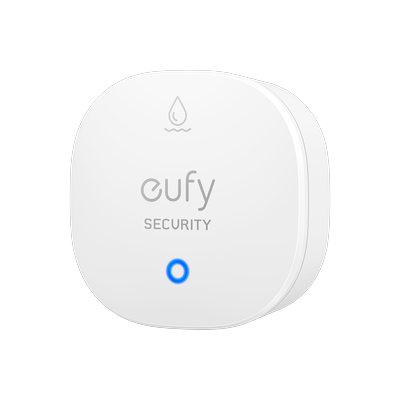
eufy Water and Freeze Sensor with Remote Alerts WhiteInstant Notifications*: Protect your home from leaks, water damage, and damage from freezing temperatures. Get notifications if water is detected or if the temperature drops below freezing. East to Set Up: Just place it anywhere you want to detect...34,99 $*Shipping: 0,00 $Secure redirect to the provider



-
What is energy dissipation in inelastic collisions?
Energy dissipation in inelastic collisions refers to the loss of kinetic energy during the collision, resulting in the formation of internal energy within the system. This internal energy can manifest as heat, sound, or deformation of the objects involved in the collision. In contrast to elastic collisions where kinetic energy is conserved, inelastic collisions involve a transfer of energy that is not fully retained by the objects involved. The amount of energy dissipated in an inelastic collision can be calculated by comparing the initial and final kinetic energies of the system. **
-
What are tips to prevent collisions with wildlife?
To prevent collisions with wildlife, it is important to be aware of your surroundings, especially in areas known for wildlife crossings. Reduce your speed, especially during dawn and dusk when animals are most active. Use your high beams at night to increase visibility and watch for shining eyes on the side of the road. Lastly, always wear your seatbelt and avoid distractions while driving to give yourself the best chance of reacting quickly to any wildlife on the road. **
-
How can collisions be effectively detected in Java?
Collisions can be effectively detected in Java by using data structures such as hash tables or hash maps. These data structures use a hashing function to map keys to specific locations in memory, allowing for quick retrieval and comparison of values. By implementing proper hashing functions and handling collision resolution techniques such as chaining or open addressing, collisions can be efficiently detected and managed in Java programs. Additionally, using libraries or frameworks that provide built-in collision detection mechanisms can also simplify the process of detecting collisions in Java. **
-
How do I detect collisions and clicks in Unity?
In Unity, you can detect collisions by using the OnCollisionEnter or OnTriggerEnter functions in a script attached to the GameObject with a collider component. These functions will be called when a collision occurs with another GameObject. To detect clicks, you can use the Input.GetMouseButtonDown function in the Update method of a script. This function will return true when the specified mouse button is pressed. You can then use this information to perform actions based on the collision or click event. **

How can the energy lost in collisions be calculated?
The energy lost in collisions can be calculated using the principle of conservation of energy. The initial kinetic energy of the system before the collision is compared to the final kinetic energy of the system after the collision. The difference between the initial and final kinetic energies represents the energy lost in the collision. This energy loss can be calculated using the formula: energy lost = initial kinetic energy - final kinetic energy. **
Why are there energy collisions in Franck-Hertz experiments?
Energy collisions occur in Franck-Hertz experiments because electrons are accelerated towards a positively charged grid, gaining kinetic energy. When these high-energy electrons collide with mercury atoms in the tube, they transfer some of their energy to the atoms, exciting them to higher energy levels. This energy transfer results in a decrease in the kinetic energy of the electrons, which can be measured as a drop in voltage across the tube. These collisions are crucial for observing the quantized energy levels of the mercury atoms. **
Top-Angebote
Products related to Collisions:
-
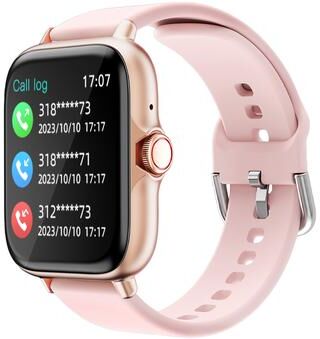
Inspire Daily Merch Waterproof Smart Watch With Information Alerts Sleep Monitoring Pedometer And Message Answer Call pinkHighQuality Waterproof Design for Active Lifestyles The 1.83'' Waterproof Smart Watch is designed to withstand your most active days. Whether you're caught in the rain or swimming, this smart watch's waterproof feature ensures reliable performance...179,97 $*Shipping: 0,00 $Secure redirect to the provider
-
William Collins Beautiful News: Positive Trends, Uplifting Stats, Creative Solutions by David McCandlessIn this fascinating follow-up to the bestselling Information is Beautiful and Knowledge is Beautiful, the king of infographics David McCandless uses spectacular visuals to give us all a bit of good news. We are living in the Information Age, in which we are constantly bombarded with data – on television, in print and online. How can we relate to this mind-numbing overload? Enter David McCandless and his amazing infographics: simple, elegant ways to understand information too complex or abstract to grasp any way but visually. In his unique signature style, he creates dazzling displays that blend facts with their connections, contexts and relationships, making information meaningful, entertaining – and beautiful. In his highly anticipated third book, McCandless illustrates positive news from around the world, for an informative, engaging and uplifting collection of new infographic art.5,99 £*Shipping: 2,99 £Secure redirect to the provider
-
What are collisions in physics?
Collisions in physics refer to the interactions between two or more objects that result in a change in their motion or properties. These interactions can be classified as either elastic, where kinetic energy is conserved, or inelastic, where kinetic energy is not conserved. Collisions are important in understanding the behavior of particles and objects in various physical systems, such as in the study of momentum, energy, and conservation laws. They are also crucial in fields such as engineering, astrophysics, and particle physics. **
-
What happens during collisions in bitstuffing?
During collisions in bitstuffing, when multiple consecutive 1s are encountered in the data stream, a bit is stuffed (added) after the 5th consecutive 1 to ensure that the receiver can differentiate between the actual data and the stuffed bits. This helps in maintaining synchronization between the sender and receiver. If a collision occurs, the receiver will detect the stuffed bit and remove it to correctly interpret the data. **
-
What is energy dissipation in inelastic collisions?
Energy dissipation in inelastic collisions refers to the loss of kinetic energy during the collision, resulting in the formation of internal energy within the system. This internal energy can manifest as heat, sound, or deformation of the objects involved in the collision. In contrast to elastic collisions where kinetic energy is conserved, inelastic collisions involve a transfer of energy that is not fully retained by the objects involved. The amount of energy dissipated in an inelastic collision can be calculated by comparing the initial and final kinetic energies of the system. **
-
What are tips to prevent collisions with wildlife?
To prevent collisions with wildlife, it is important to be aware of your surroundings, especially in areas known for wildlife crossings. Reduce your speed, especially during dawn and dusk when animals are most active. Use your high beams at night to increase visibility and watch for shining eyes on the side of the road. Lastly, always wear your seatbelt and avoid distractions while driving to give yourself the best chance of reacting quickly to any wildlife on the road. **
Similar search terms for Collisions
-
Fake News Party Card Game by Topi Games for 2-8 Players, Ages 16+Fake News is a quick-fire party card game that combines imagination, bluffing, and a straight face to create the most ridiculous story. Designed for 2–8 players aged 16 and over, it offers a lively session of around 15 minutes. Players take turns inventing absurd news stories, exaggerating the details, and trying to persuade everyone at the table that their tale deserves attention. The more creative and convincing the story, the better the chance of collecting likes and becoming the standout storyteller. With its humor-led premise and short playing time, Fake News is well suited to game nights, parties, and gatherings where players are ready to improvise. There's no need for serious reporting here; the stranger the headline, the more entertaining the result can be.12,39 £*Shipping: 3,95 £Secure redirect to the provider
-
eufy Water and Freeze Sensor with Remote Alerts WhiteInstant Notifications*: Protect your home from leaks, water damage, and damage from freezing temperatures. Get notifications if water is detected or if the temperature drops below freezing. East to Set Up: Just place it anywhere you want to detect...34,99 $*Shipping: 0,00 $Secure redirect to the provider
-
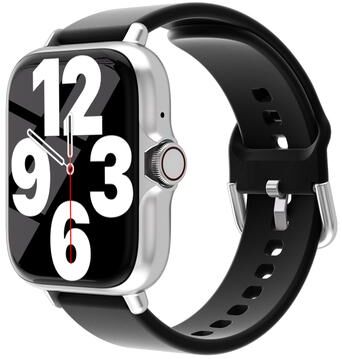
Inspire Daily Merch Waterproof Smart Watch With Information Alerts Sleep Monitoring Pedometer And Message Answer Call slivery BlackHighQuality Waterproof Design for Active Lifestyles The 1.83'' Waterproof Smart Watch is designed to withstand your most active days. Whether you're caught in the rain or swimming, this smart watch's waterproof feature ensures reliable performance...179,97 $*Shipping: 0,00 $Secure redirect to the provider
-
How can collisions be effectively detected in Java?
Collisions can be effectively detected in Java by using data structures such as hash tables or hash maps. These data structures use a hashing function to map keys to specific locations in memory, allowing for quick retrieval and comparison of values. By implementing proper hashing functions and handling collision resolution techniques such as chaining or open addressing, collisions can be efficiently detected and managed in Java programs. Additionally, using libraries or frameworks that provide built-in collision detection mechanisms can also simplify the process of detecting collisions in Java. **
-
How do I detect collisions and clicks in Unity?
In Unity, you can detect collisions by using the OnCollisionEnter or OnTriggerEnter functions in a script attached to the GameObject with a collider component. These functions will be called when a collision occurs with another GameObject. To detect clicks, you can use the Input.GetMouseButtonDown function in the Update method of a script. This function will return true when the specified mouse button is pressed. You can then use this information to perform actions based on the collision or click event. **
-
How can the energy lost in collisions be calculated?
The energy lost in collisions can be calculated using the principle of conservation of energy. The initial kinetic energy of the system before the collision is compared to the final kinetic energy of the system after the collision. The difference between the initial and final kinetic energies represents the energy lost in the collision. This energy loss can be calculated using the formula: energy lost = initial kinetic energy - final kinetic energy. **
-
Why are there energy collisions in Franck-Hertz experiments?
Energy collisions occur in Franck-Hertz experiments because electrons are accelerated towards a positively charged grid, gaining kinetic energy. When these high-energy electrons collide with mercury atoms in the tube, they transfer some of their energy to the atoms, exciting them to higher energy levels. This energy transfer results in a decrease in the kinetic energy of the electrons, which can be measured as a drop in voltage across the tube. These collisions are crucial for observing the quantized energy levels of the mercury atoms. **
* All prices are inclusive of VAT and, if applicable, plus shipping costs. The offer information is based on the details provided by the respective shop and is updated through automated processes. Real-time updates do not occur, so deviations can occur in individual cases. ** Note: Parts of this content were created by AI.